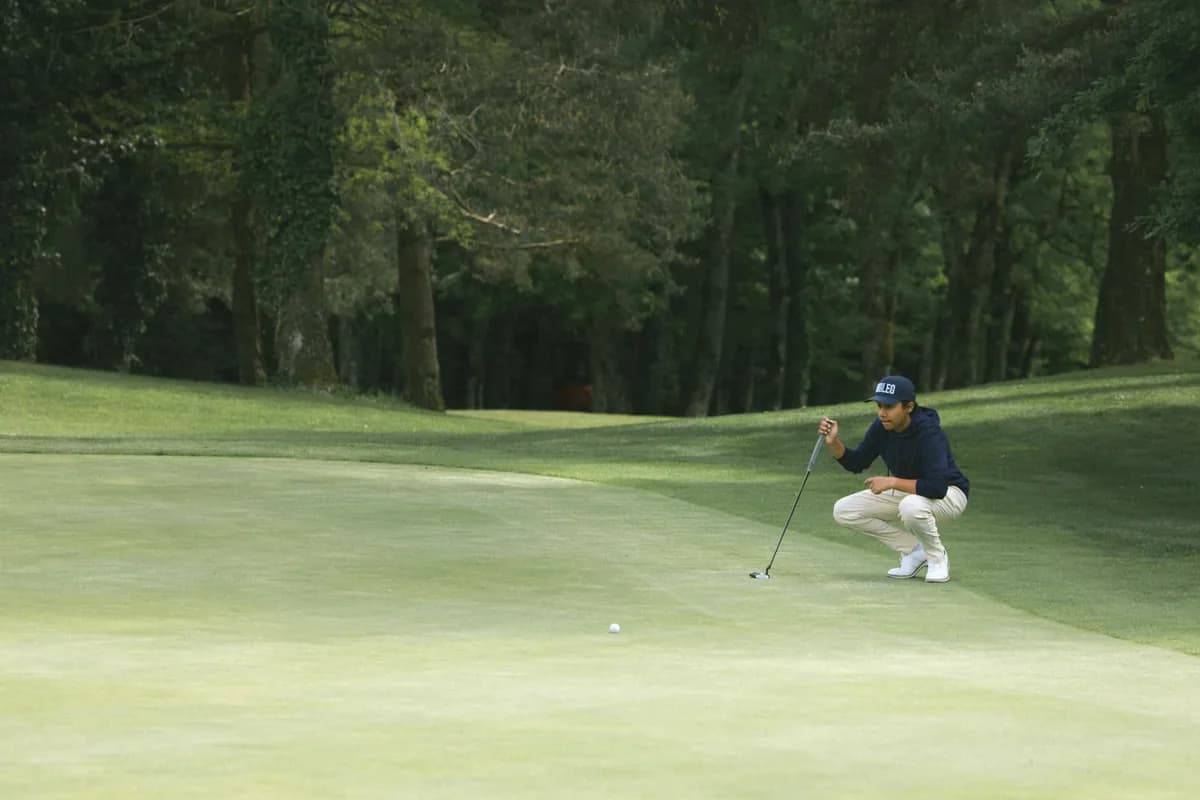
The wind got up before your tee time and it has not dropped. Your ball lands short of the green, bounces once, sets off again and finishes twenty metres past the flag. You spend the afternoon playing low and aiming short.
A links course is a golf course laid out on a strip of sandy ground between the sea and the fields: firm, free-draining turf, close-cropped grass, almost no trees, and nothing to stop the wind. That day is the rule there, and everything else follows from it.
Links, the definition: a strip of land between the sea and the fields
That sandy ground was poorly suited to farming. Between the beach and the first fields you found dunes, hollows and gorse. Golf found a playing field there whose character owes a great deal to the landscape.
Hence the silhouette you recognise straight away: open ground, few trees, little shade. The routing often leans on the dunes and on the natural undulations of the ground.
That is the whole of it: what makes a links is the ground, not the view. A course can run along the sea for eighteen holes without being one, because it sits on heavy soil. What decides happens underneath the ball, at the moment it lands.
The difference from a parkland course: the ball runs instead of stopping
Many of the courses we play here belong to another family: softer ground, trees along the edges, grass that holds more. You get the ball up, it climbs, it comes down, and it often stops closer to where it pitched. The game happens more in the air, even if the bounce always depends on the ground.
On firm, sandy ground, that piece of information is no longer enough. The ball lands, and it carries on. The bounce is sharp, quick, and it decides for you. You stop aiming at the flag and start aiming at the place where the ball will begin to run.
The wind finishes the job. Little stops it, and a high ball gives it more to work with. So you play low, often along the ground, running the ball towards the green like a long, approximate putt. A shot people sometimes practise too little.
The principle of the game fits in one sentence, in fact: play the course as you find it and the ball as it lies. Elsewhere you quote it standing over a bad lie. There, it is the whole day.
On windy days, the driver you pull out on the tee by reflex becomes a genuine question again.
Switzerland does not have the sandy coastline where links courses grew up. We talk about them because the game comes from that ground, and because on a very windy morning, on our own courses, some of the same constraints come back. A lower trajectory and one more club can help then, if the ground lets the ball run. We prefer that adjustment to the spectacular shot attempted without accounting for the wind.
Whether a given seaside course really deserves the label is a conversation for the bar. Out on the ground, look above all at the turf and the wind.
Why our line is called Links Edition
The name is not decoration. That landscape is where we started: the wind, the close-cropped grass, the low light, an outfit that lasts four hours outdoors and comes home with you. We prefer names that say where a piece comes from over names that promise what it will do.
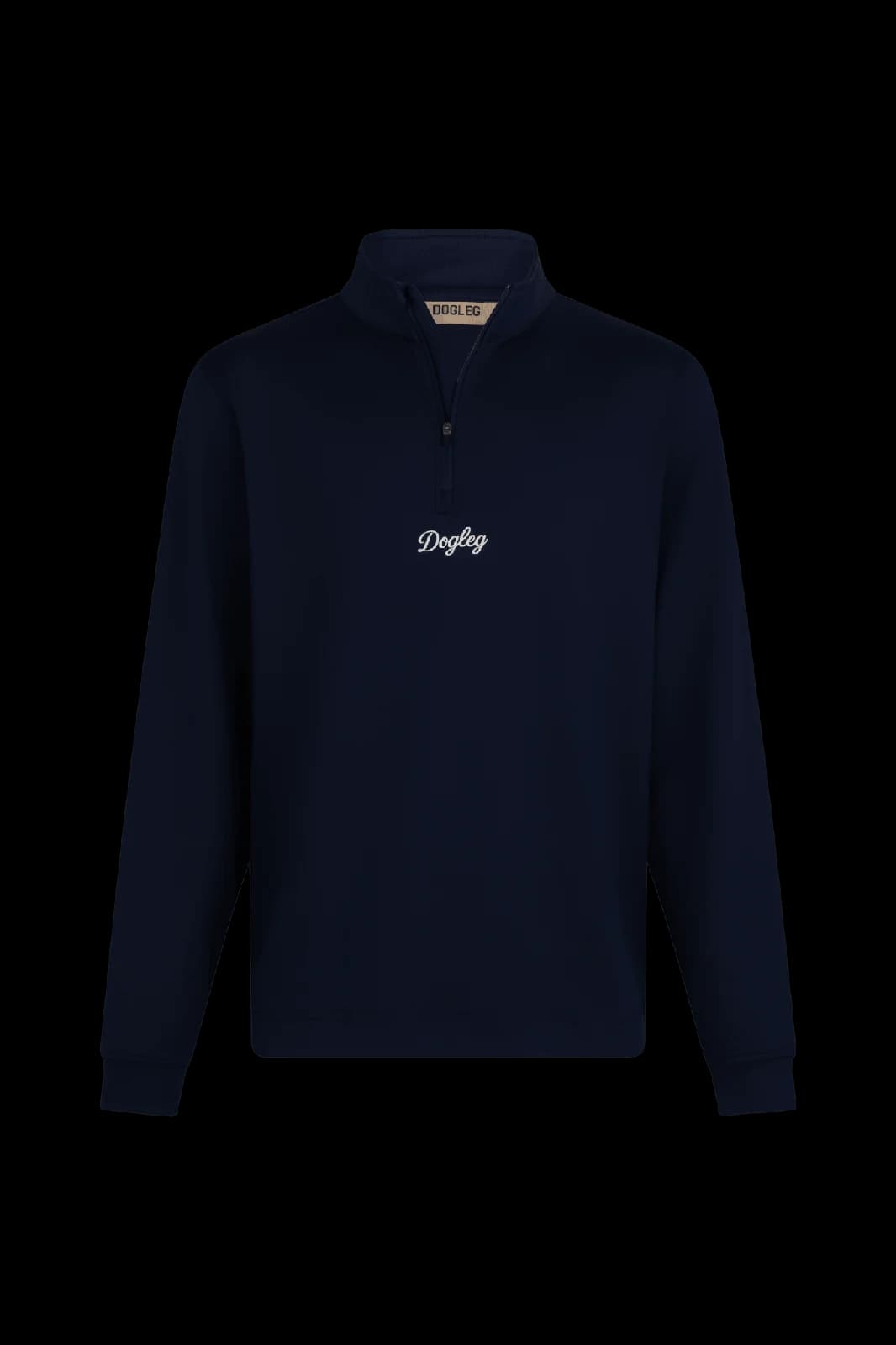
Five pieces in all: the Links Tee, the Tailored Polo in white and the Quarter Zip in navy, the last two made for men and for children. Two generations, the same piece at two sizes of life: that has been our subject since the first day.
The polo is in our technical fabric, polyester with a share of elastane: that share is what puts the garment back in place after the backswing. The quarter zip is the piece you close at the collar on an exposed hole and open again as soon as the wind drops. The tee is cotton, one hundred per cent, thick and structured: a piece you wear before and after, not during.