
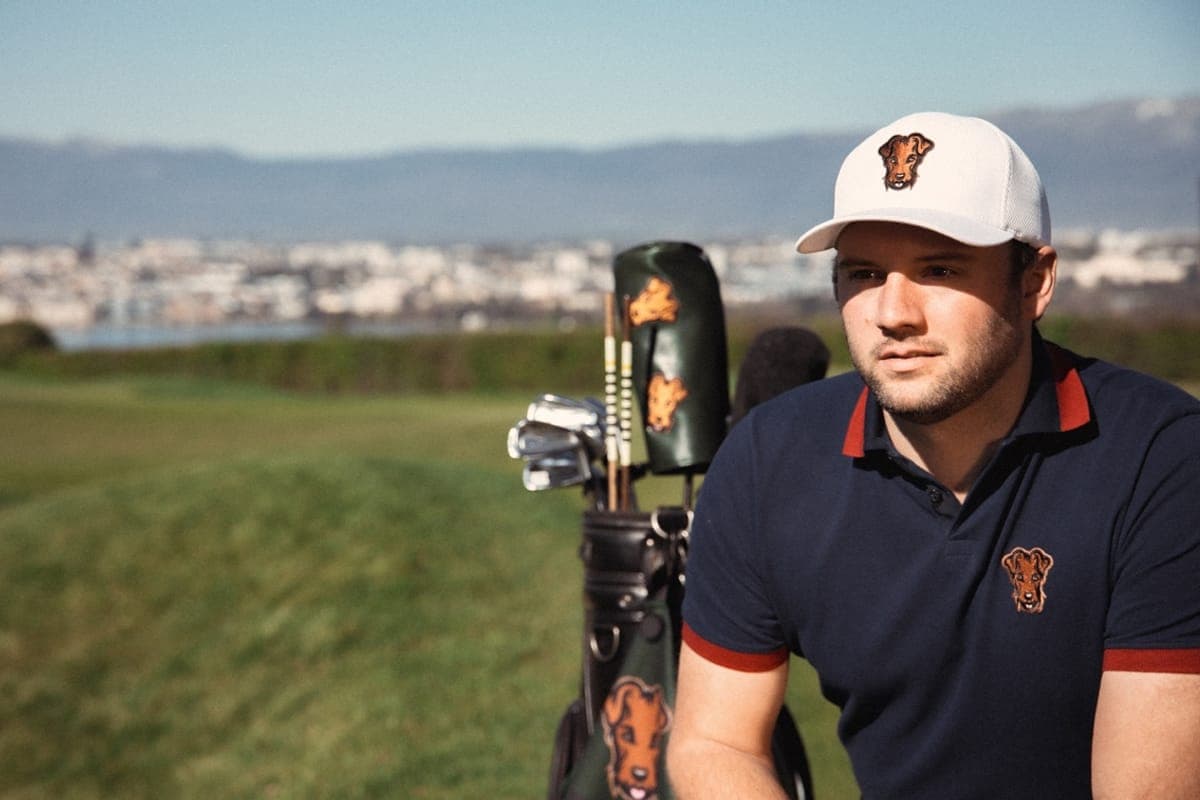
You hit your drive, the ball starts well, you follow it with your eyes and halfway through its flight it enters the white of the sky and does not come out. Nobody in the group saw where it came down. You go off to look for it in the rough, and your card takes a hit that has nothing to do with your swing.
That is why we always play in a cap. Here is the proper definition anyway: a peaked head covering worn from the first tee to the last green. The rest is more interesting.
What the peak does for your game
A round lasts hours and shade is rare out there. No buildings, no cover, a few trees along the edges that you only visit on days when the ball goes sideways.
The sun bothers you at two moments, and they are not the ones people think of.
In the air, it is the ball. White against a bright sky, it disappears quickly, and a ball whose final flight nobody followed means lost time and often an extra shot.
On the green, it is the slope. When the light comes straight along your line of sight, the contours flatten out, everything looks level, and you read a straight putt that isn’t. You know the reflex: a hand above the eyes to make some shade. That is the peak’s job, except it does it while both of your hands are holding the putter.
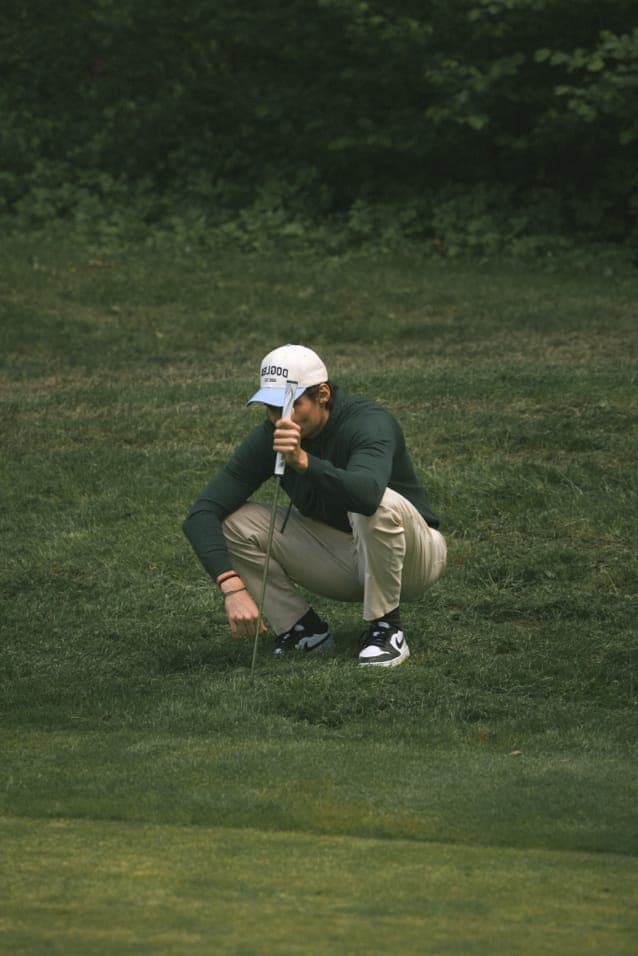
If you remember one thing from this article, it is this: the cap is not the accessory that makes you look like a golfer, it is a reading tool.
Then, the skin. The face, the ears, the back of the neck, the scalp, hours on end, season after season. A cap does not replace sunscreen, that was never the question. It covers the place sunscreen does not stay: the scalp, especially once the hair grows discreet. We are not going to lecture you about it.
The shapes, and the one that lives in our bag
They all have a peak. After that, it comes down to three things: the curve, the ventilation, the way it tightens.
The curved peak. The classic shape, and the one we wear most. The curve follows the field of vision and catches the light arriving from the side, the late-afternoon light when the sun drops and takes you at an angle. It stays put, it goes unnoticed, it does the job.
The flat peak. More surface, so a sharper shadow in front, but nothing at the sides. It is a question of silhouette, not of play. Honestly, on this point, do as you like.
The trucker. Rigid front, mesh panels at the back. On a heavy day the difference is absurd to describe and obvious to wear: you take the cap off at the turn, the sweatband is damp instead of soaked, you put it back on and think no more about it. That is what we reach for as soon as it is hot, without thinking.
The snapback. The name comes from the adjustment: a notched strap at the back that clips shut. You adjust it notch by notch, it stops moving, and it goes from one head to another without argument.
The so-called performance models? Light fabric that dries quickly and holds when the wind picks up. That is all.
In the clubhouse, you take it off
Outside it is worn, inside it comes off. At the entrance, at the bar, and above all at the table, where it ends up on the bench or hooked over the back of the chair.
That gesture does not come from golf. It comes from table manners, where a hat is removed when you enter someone’s home or sit down to eat. Golf kept it, among others.
Nobody is going to remark on it. But it shows when it is missing, and there is one moment where it genuinely counts: the handshake on the last hole. Cap off, you look at each other, you say thanks for the round. It is not a rule, it is better than a rule.