
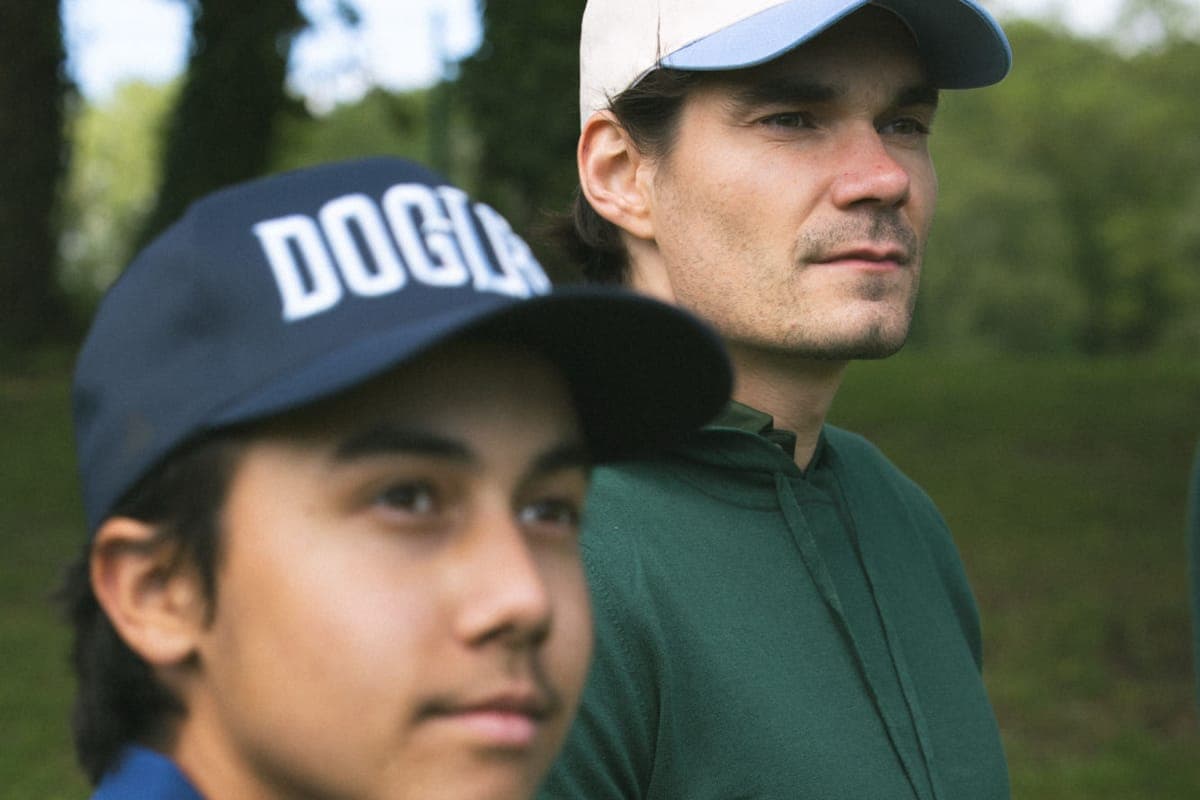
We are almost never asked about fabric, or about cut. We are asked whether the club will say something. That is the real question when a child starts, and it is a fair one: nobody wants to be pulled up at reception, in front of their kid, over a t-shirt.
So let us answer it straight away. The essentials come down to two pieces: a collared top, and a bottom that is neither denim nor tracksuit. The rest is comfort and weather, and none of it justifies rebuilding a wardrobe for a child who doesn’t yet know whether they will like the game.
The pieces, in their real order of importance
The collared top. The one point we wouldn’t argue about: it is the safe bet everywhere. Buy today’s size, not next year’s — an oversized polo turns around the body during the swing, and the child feels the garment before they feel the movement.
The bottom. Trousers, golf shorts, skort. The only test worth running: can they crouch down to read a putt without it pulling at the thigh. Pockets, yes. Jeans, no: they have no place on the course. In the clubhouse many clubs tolerate them if they are clean, but don’t build your day around it.
The midlayer. A quarter-zip or a fine knit. A round starts cold and finishes warm, and the layer you take off does more work than a heavy jacket.
The cap. A round is counted in hours and almost no hole offers shade. Peak forward outside, off as soon as you go through a door: that one isn’t up for discussion anywhere.
The shoes. On the range, clean trainers will do. On the course there is a single red line: metal spikes, no; soft spikes, yes. And we would rather see trainers than golf shoes bought two sizes too big to last one more season.
Everything else depends on the club. The rules vary from one place to the next, and a call to the office the day before settles it in two minutes. While you are at it, ask the other question that comes up constantly, the one about access to the course: there is no national minimum age, each club decides, and it looks at the child’s standard far more than at their date of birth.
A child who has a rule explained to them once will respect it. What they cannot bear is being corrected on the spot, in front of everyone, for something nobody had told them.
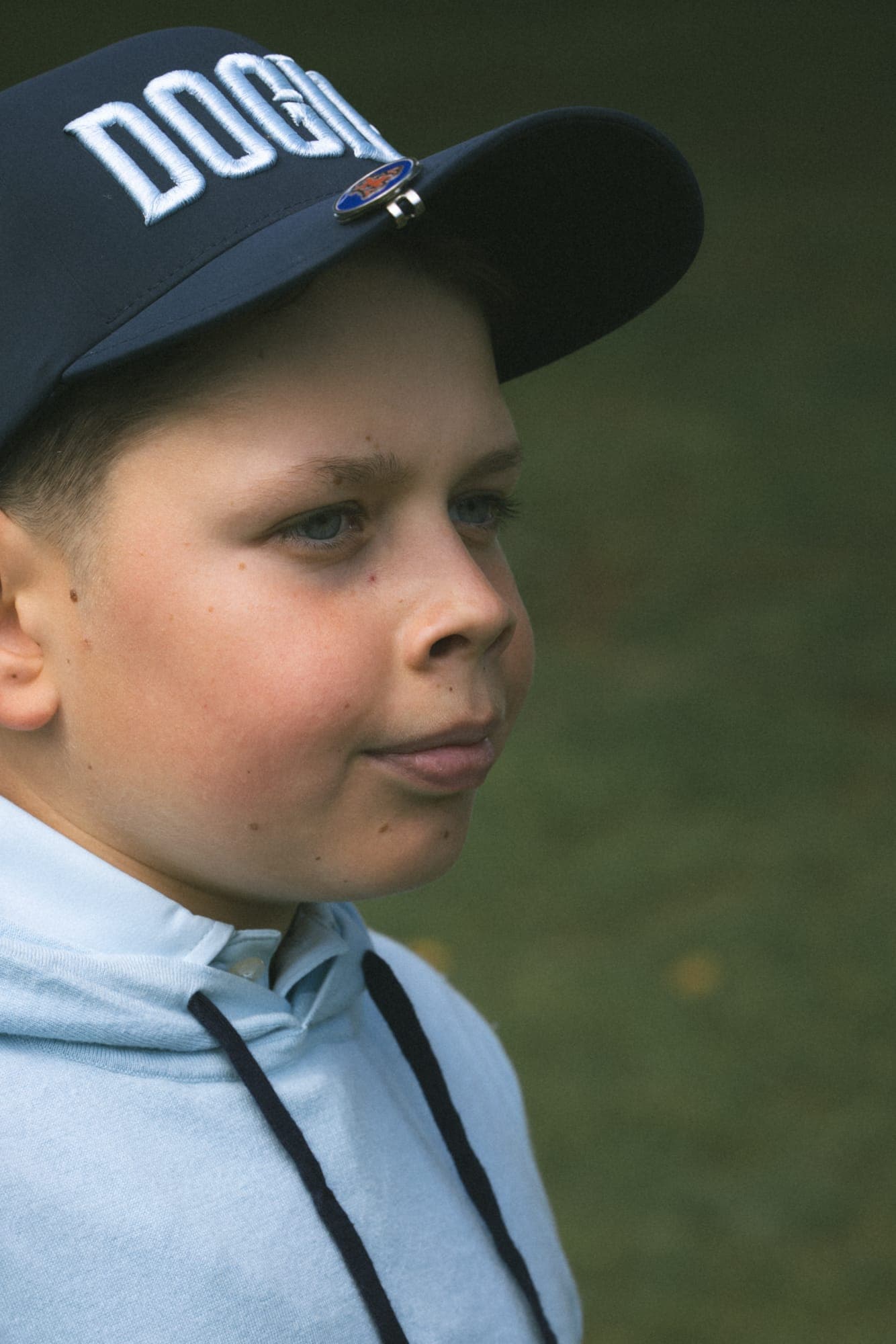
A movement being learned needs to be free
The swing is a rotation: the shoulders turn, the hips follow. Anything that blocks either one slows the learning down. In practice: no rigid seam under the armpit, no sleeve gripping the bicep, a fabric that stretches and comes back. Our junior pieces are polyester with a share of elastane, 6 % on the polos, 7 % on the shorts and skorts: that is what makes a garment return to shape instead of staying stretched.
A child will never tell you that their polo blocks them at the top of the backswing. They will tug at their sleeves between shots, or shorten their movement without knowing why. It is up to the parent to spot it.
Growing without replacing everything
That is the real objection, and it is a fair one: they are going to grow. The answer comes down to three habits.
Buy today’s size for whatever touches the skin. Room to grow is taken on the outer layer, never on the polo: a roomy sweater bothers nobody, a roomy polo gets in the way of the movement.
Favour what can be adjusted. A belt extends the life of a pair of trousers once the fit is no longer perfect, and with a child, width becomes a problem before length does. It is also what keeps a tucked-in polo in place for eighteen holes.
Layer rather than replace. The quarter-zip from two years ago still goes over a correctly sized polo, and it handles the cold morning just as well as it did.
And if your child wants the orange one, take the orange one: they will put it back on the following Sunday without being asked.
On our side, the Junior Links Edition quarter-zip runs from 6 to 16 years, and the junior polos from 6 to 14. Every product page publishes its measurements in centimetres — and between two sizes, the crouch test settles it better than a table does.
If you remember one thing
Have them wear the whole outfit once on the range, before the day itself. Whole means whole: shoes, belt, cap, the layer they will take off. That is where you find out that the collar scratches or the trousers ride up — not on the first tee with three people waiting behind.