
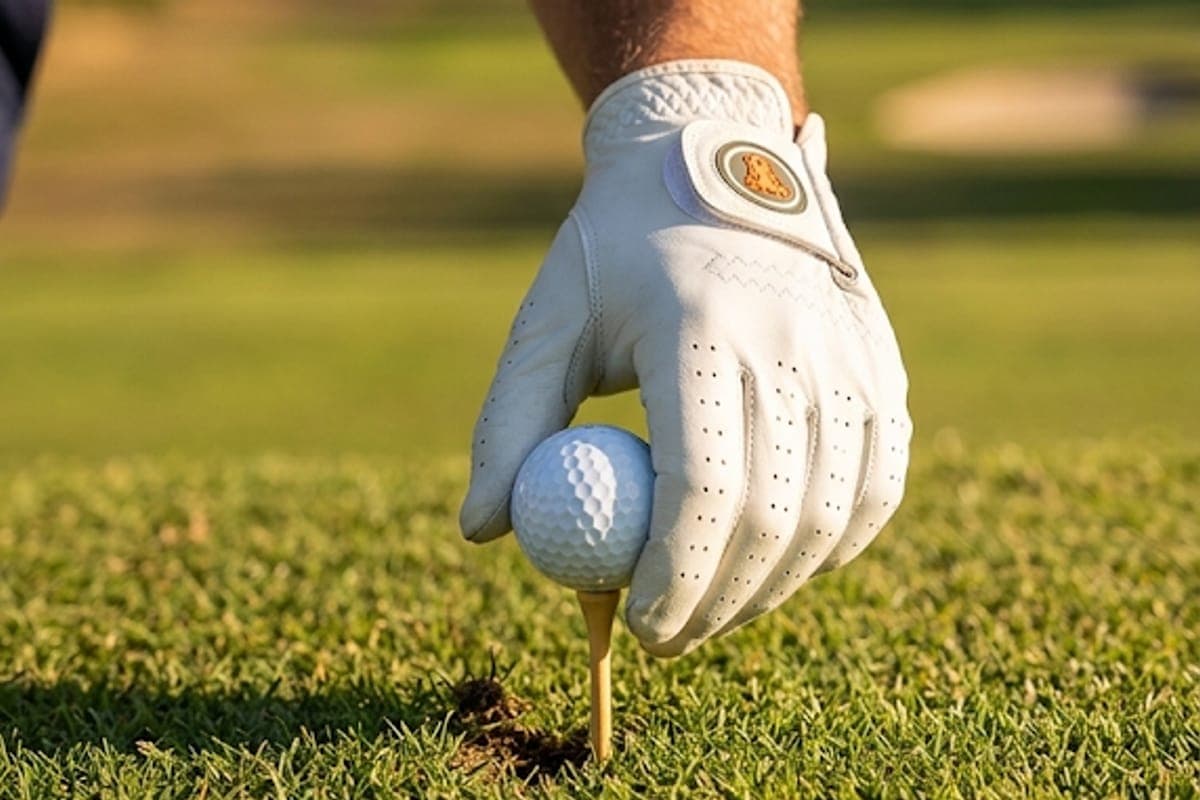
It is the first piece of golf equipment you ever hold, and probably the last one you ever think about. A bit of wood you push into the ground, break, and forget at the bottom of a pocket until it reaches the washing machine.
And yet it is the only moment of the round where you decide everything: where your ball sits, at what height, facing which way. The rest of the time you play what the ground gives you. You may as well make the most of it.
Right, the definition, quickly. A tee is a small support pushed into the ground, on which the ball is placed before you hit. It lifts the ball above the grass so the clubface meets it cleanly, without going through the turf first. A crisper contact, and tee shots that resemble each other from one hole to the next.
Once per hole, no more
On the teeing ground, and nowhere else. Once the first shot is played, the ball is played where it lies: fairway, rough, sand if that is where it ended up. That is why, in everyone’s mind, the tee is glued to the driver.
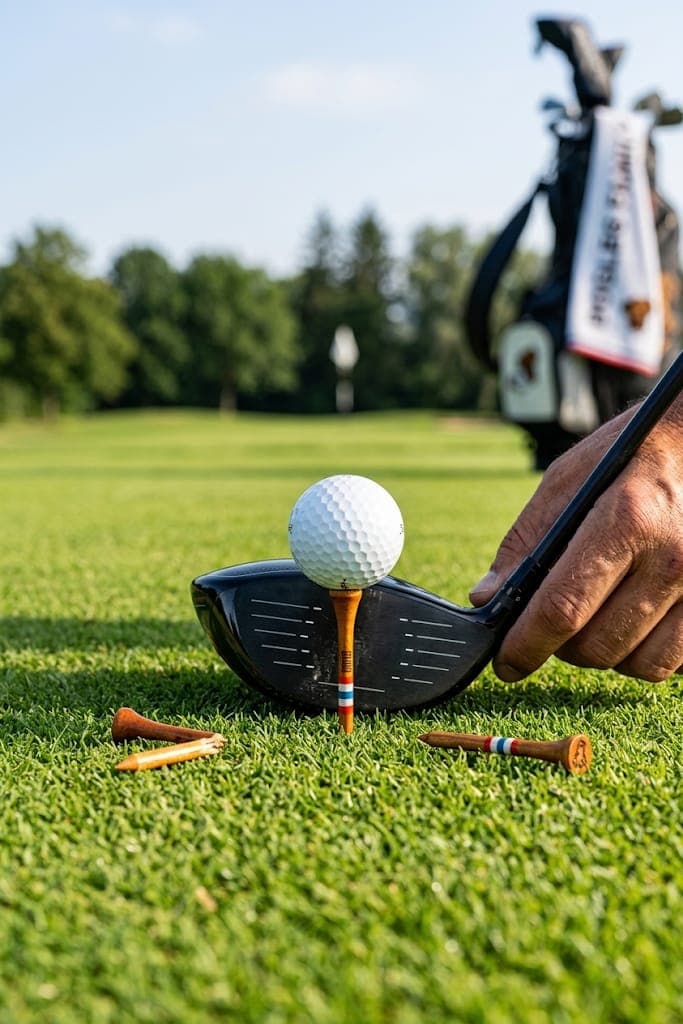
The height is where it is all decided
If you remember one thing from this article, take this one: with a driver, most players tee it too low. The ball must sit above the top of the clubface, clearly, not by a hair, because the driver is struck on the way up, at the end of the movement, and that is where the height and the distance you have been chasing for six months come from.
Go up a notch. Then another.
With a fairway wood or a hybrid, you come down considerably. The ball sits low, almost at grass level, because the shot is struck on a much flatter path. With an iron, very low: the tee now only provides a clean lie, the movement stays descending, exactly as it would on the fairway. Taking an iron on a short or narrow hole and teeing it barely off the ground is probably the most profitable decision available on a teeing ground.
As for the exact height, to the millimetre, the one everyone talks about: honestly, do as you like. You tee it, you hit it, you go up or down a notch on the next shot, you keep whatever gives you the most consistent contact. And you do that in practice, not on the first tee with three people waiting behind you.
Wood or plastic
We use wood. It breaks sooner, sometimes on the very first shot, but it goes into the ground better and it disappears into the course.
Plastic lasts longer, that is true. The problem is the day it gives way anyway: it leaves coloured shards in the grass, and those you can see.
Either way, breakage is part of the deal. Tees are carried in numbers and replaced without a thought: you lose some, you find a bent one at the edge of the teeing ground. No rule obliges anyone to pick up the pieces, which is why you notice straight away the players who do.